What you're hearing
When
Tree squirrels are active by day and call all year. Gray squirrels are busiest in the early morning and late afternoon, which is also when squirrels living in an attic are loudest as they head out and come back.
Gray squirrels have two breeding periods, in late winter and again in summer, when groups of males chase a female through the trees with plenty of chattering and noise. If you hear scampering in the attic in the middle of the night instead, consider flying squirrels or raccoons, both of which are nocturnal.
Where
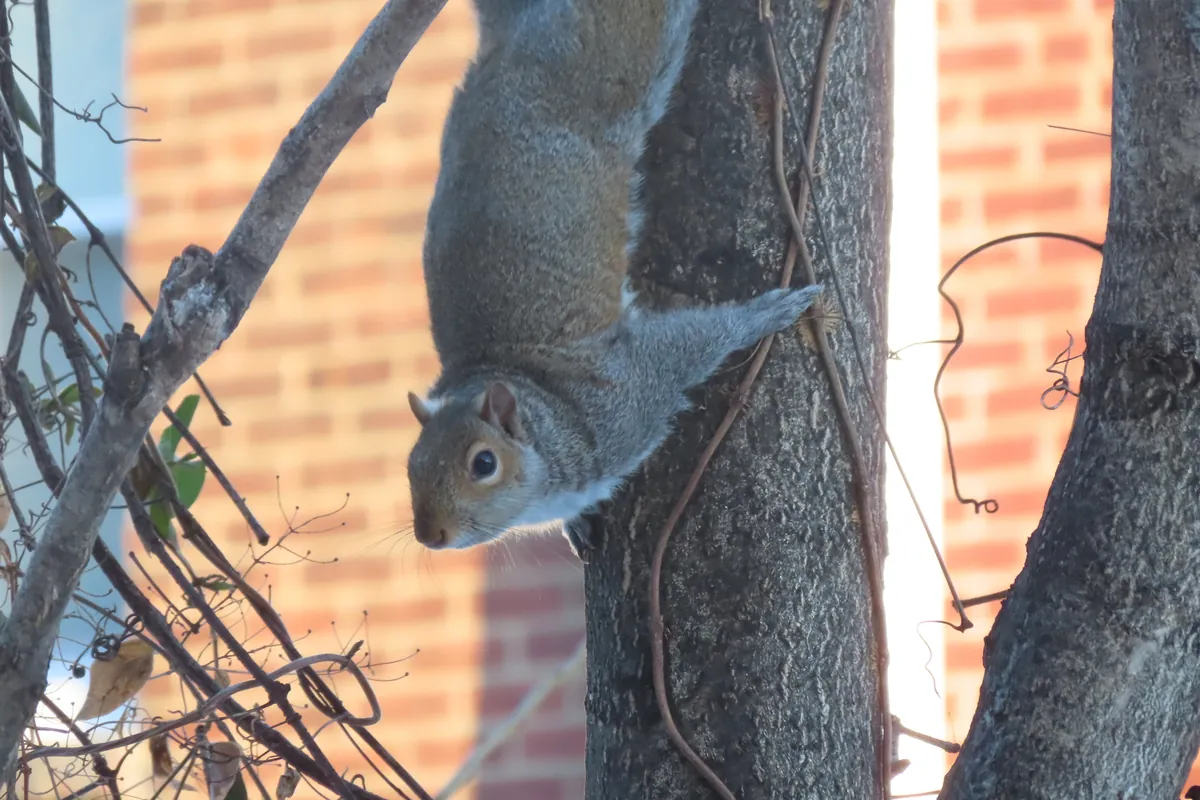
Eastern gray squirrels live across the eastern half of the country and have been introduced to many western cities. Fox squirrels overlap much of that range and sound similar. Red squirrels live in conifer and mixed forests across the North, the Northeast, the upper Midwest and the Rocky Mountains, and the closely related Douglas squirrel fills that role in the Pacific Northwest.
Gray and fox squirrels are at home in yards, parks and city streets. They get into attics through gaps in soffits, fascia, ridge vents, loose siding and vent screens, often jumping from overhanging branches.
Why it calls
Most squirrel calls you notice are alarms. The short kuk barks and longer quaa calls, with a flicking tail, are aimed at a predator such as a hawk, cat or dog, and the squirrel often keeps calling until the threat leaves.
Red squirrels chatter and rattle mainly to defend their territory and food stores, so they will scold people, other squirrels and pets loudly. Soft calls and squeaks pass between mothers and young, and young squirrels squeal when distressed.
Squirrel facts
Squirrel sounds on this page come from several tree squirrels, so each fact names the species it applies to.
- Size
- Eastern gray squirrel: 16-24 in. including tail. Red squirrel: 9-13 in. Flying squirrels: 8-10 in. Tree Squirrels (Penn State Extension)
- Weight
- Gray squirrel: 15-24 oz. Fox squirrel: 1.9-2.2 lb. Red squirrel: 4-8 oz. Flying squirrels: 1.3-4 oz. Tree Squirrels (Penn State Extension)
- Lifespan
- Eastern gray squirrel: up to 12.5 years recorded in the wild; over 20 in captivity. Sciurus carolinensis (Animal Diversity Web)
- Diet
- Gray and fox squirrels: acorns, hickory nuts, walnuts and other seeds. Red squirrels rely heavily on conifer cones and buds. Tree Squirrels (Penn State Extension)
- Active
- Gray squirrel: daytime, peaking about 2 hours after sunrise and again before sunset. Flying squirrels are the only nocturnal ones. Sciurus carolinensis (Animal Diversity Web)
- Habitat
- Gray: anywhere with enough nuts and seeds. Fox: oak-hickory woods. Red: conifer and mixed forest. Tree Squirrels (Penn State Extension)
Where it lives: Found in nearly every state in the lower 48.
Year-roundSounds like… but isn't
- Raccoon: Raccoons in an attic sound heavy and are active in the middle of the night; squirrels make lighter, faster scampering and rolling sounds around dawn and dusk.
- Bat: Bats in a wall or attic give faint, high squeaks and rustling right around dusk, without the running and gnawing sounds squirrels make.
Should I worry?
Squirrels outside are harmless. Squirrels inside the house are a real problem: they gnaw on wiring, pipes and rafters, and chewed wiring is a fire hazard. Grinding or gnawing sounds in the attic deserve prompt attention.
The fix is exclusion. Find the entry hole and fit a one-way door or exclusion funnel that lets squirrels out but not back in, then seal the hole permanently with sheet metal or hardware cloth once they are gone. Do not seal squirrels inside; they will chew new holes trying to get out. Be careful during the late-winter and summer breeding seasons, when young may still be in the nest and could be trapped. Keep tree branches trimmed well back from the roof.
Many states restrict trapping and moving squirrels, so check with your state wildlife agency or county extension office before trapping. Your state wildlife agency lists licensed wildlife control operators if you would rather hire the job out.
Sources: Eastern Gray Squirrels: Managing and Preventing Attic Damage (Alabama Cooperative Extension System); Tree Squirrels (Penn State Extension).
Questions people ask
What do squirrels in the attic sound like?
Quick scampering and running, rolling sounds (often nuts), scratching, and gnawing or grinding, mostly in the early morning and late afternoon. Noise that happens mainly in the middle of the night points to flying squirrels or raccoons instead.
Why is a squirrel barking?
A squirrel barking (kuk-kuk-kuk) while flicking its tail is almost always an alarm call aimed at a hawk, cat, dog or person. It often keeps it up until the threat leaves.
What does a red squirrel sound like?
A loud, rapid, rattling chatter, along with sharp barks and screechy calls. Red squirrels are highly territorial and will scold anything that comes near their food stores.
What does a baby squirrel sound like?
Young squirrels make high squeaks and squeals, especially when separated from their mother or handled. In an attic, squeaking along with adult activity in spring or late summer suggests a nest.
Are squirrels in the attic dangerous?
They are not aggressive toward people, but they chew wiring, which can start a fire, and they soil insulation. Use a one-way door to get them out, then seal the entry, or hire a licensed wildlife control operator.
Are squirrels active at night?
Gray, fox and red squirrels are active by day, with the busiest periods in the morning and late afternoon. Flying squirrels are the only nocturnal squirrels, so squirrel-like scampering in the attic at night is usually flying squirrels. See Penn State Extension.
Please don't play these recordings at wild animals, especially in parks: it can stress them, and many parks prohibit it.