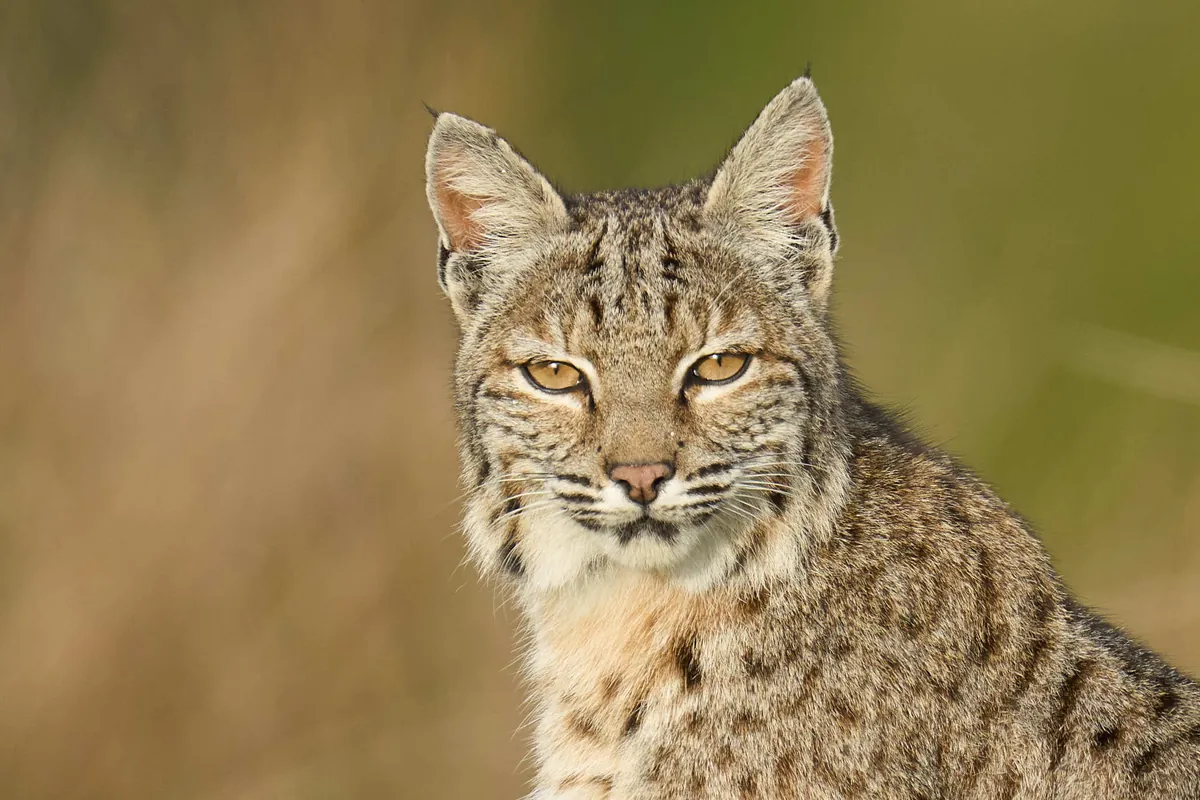
What you're hearing
When
Most bobcat calling happens during the mating season, which usually falls in late winter, roughly February and March in much of the country. That is when you are most likely to hear yowling and screaming at night.
The rest of the year bobcats are quiet. Growls and hisses are only heard at close range, for example when a bobcat is cornered or meets another bobcat or a dog.
Where
Bobcats are the most widespread wild cat in the United States and live in most of the lower 48 states, from southern swamps and eastern forests to western deserts and mountains. They are scarce or absent in parts of the intensively farmed Midwest.
They prefer woods, brushy country and rocky areas but often live close to development, crossing yards and using wooded edges, golf courses and greenbelts, usually unseen.
Why it calls
The scream and yowl are mating calls. Bobcats live alone, and calling helps males and females find each other during the short breeding season. Two bobcats meeting can produce a long exchange of yowls that sounds like a fight.
Hisses, growls and spitting are defensive warnings, the same as a housecat's, given when a bobcat feels threatened.
Bobcat facts
- Size
- Males 32-37 in. long, females 28-32 in. (Connecticut figures). Bobcat (Connecticut DEEP)
- Weight
- Males 18-35 lb., females 15-30 lb. (Connecticut figures). Bobcat (Connecticut DEEP)
- Lifespan
- Up to 12 years in the wild; up to 32 in captivity. Lynx rufus (Animal Diversity Web)
- Diet
- Rabbits, squirrels, woodchucks, mice and voles, plus some deer and birds. Bobcat (Connecticut DEEP)
- Active
- Most active just after dusk and before dawn. Bobcat (Connecticut DEEP)
- Calls peak
- Mating season, when males compete for females; bobcats rarely vocalize otherwise. Bobcat (Washington Department of Fish and Wildlife)
- Habitat
- Hardwood and mixed forest, brushy lowlands, swamps and rocky woods broken by fields. Bobcat (Connecticut DEEP)
- Conservation status
- Least Concern (IUCN Red List, 2016) Lynx rufus, Bobcat (IUCN Red List)
Where it lives: Found in nearly every state in the lower 48.
Year-roundSounds like… but isn't
- Red fox: A fox gives one short, hoarse scream at a time, spaced a few seconds apart, while a bobcat's yowl is longer, wavering and more cat-like.
- Mountain lion: A mountain lion's scream is deeper, louder and longer, but the two are hard to tell apart, and outside the West a cat scream is far more likely to be a bobcat.
- Barn owl: A barn owl gives a raspy, hissing shriek from the air that lasts a second or two, not a drawn-out yowl from the ground.
Should I worry?
A bobcat in the neighborhood is generally not a cause for concern. Bobcats are wary of people and usually run when they are noticed. The risk is to small animals:
- Small dogs and cats left outside at night may become prey. Keep them indoors, especially from dusk to dawn.
- Keep chickens, ducks and other poultry in secure pens and coops. Predator-proof runs need wire buried at least 6 inches and a wire or solid roof over the whole area.
- Feed pets indoors, or pick up their food as soon as they finish. Pet food left outdoors attracts bobcats.
- Don't feed wildlife, including deer, feral cats and squirrels, and clean up spilled bird seed. Bobcats follow their prey.
A bobcat that has killed a pet or poultry once is more likely to try again, so fix the problem quickly. Rules on trapping and relocating bobcats vary by state; contact your state wildlife agency for help with a bobcat that keeps returning or acts boldly around people.
Sources: Bobcat (Washington Department of Fish and Wildlife); Bobcat (North Carolina Wildlife Resources Commission).
Questions people ask
Why do bobcats scream at night?
Bobcats scream and yowl mostly during their late-winter mating season, when solitary males and females are trying to find each other. They are active at night, so that is when the calling is heard. The rest of the year they are mostly silent.
What does a bobcat sound like?
Most of the time, nothing: bobcats rarely vocalize. In mating season they make long, wavering yowls and screams like a housecat fight turned up very loud, sometimes compared to a crying baby. At close range they hiss, growl and spit.
Is it a bobcat or a fox screaming?
A red fox gives a single hoarse scream, repeats it every few seconds, and can keep going for minutes. A bobcat's yowl is longer and rises and falls like a cat's. Both peak in winter. Compare them on our animal screams page.
Will a bobcat attack my cat or dog?
It can. Washington's wildlife agency warns that small dogs and cats left outside at night may become prey and that bobcats have attacked dogs as large as a cocker spaniel. Keeping small pets indoors from dusk to dawn is the most effective protection.
Are bobcats dangerous to people?
Healthy bobcats are wary of people and usually flee when seen. A bobcat that approaches people, acts sick or behaves boldly should be reported to your state wildlife agency rather than approached.
How big is a bobcat?
About twice the size of a house cat. Connecticut's wildlife agency gives males at 18 to 35 pounds and 32 to 37 inches long, and females at 15 to 30 pounds. See Connecticut DEEP.
Please don't play these recordings at wild animals, especially in parks: it can stress them, and many parks prohibit it.