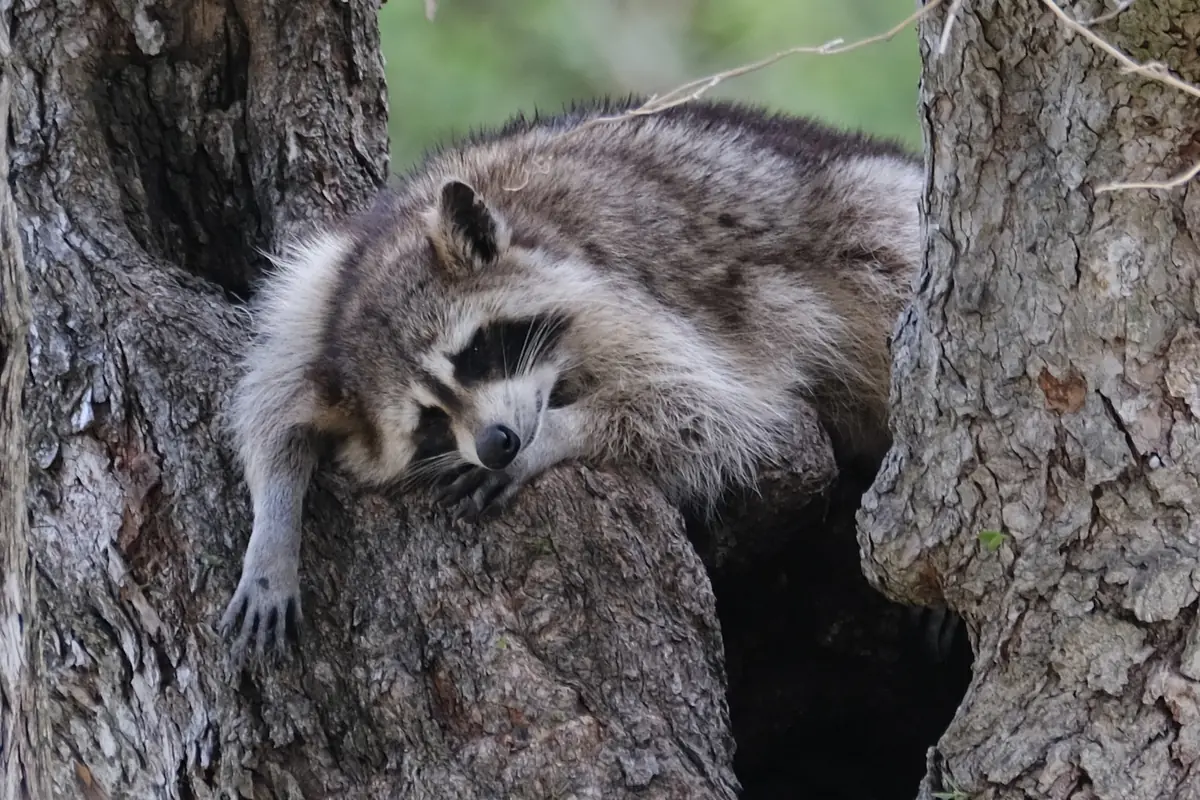
What you're hearing
When
Raccoons are mostly nocturnal, so most raccoon noise starts around dusk and runs through the night. Sounds from an attic or chimney are often loudest when the animals leave after dark and come back toward dawn.
They are active all year. In cold northern winters they may hole up for days during cold snaps, but they do not truly hibernate. Late winter is mating season, when males travel and fights get noisy. In spring and early summer, a mother denning in an attic, chimney or crawl space means a lot of chittering and trilling from young that stay with her for months.
Where
Raccoons live across nearly all of the lower 48 states, absent only from some of the driest desert and high mountain country. They do well in suburbs and cities as long as there is water, shelter and food.
Around homes they den in attics, chimneys, wall voids, crawl spaces, under decks and porches, and in sheds and garages. At night they raid trash cans, compost and pet food bowls, which is where many of the growls and screeches come from.
Why it calls
Chittering, churring and purring are everyday sounds between a mother and her young or between animals that know each other. Growls, hisses and snorts are warnings, usually when one raccoon is pushed off food or cornered by a dog.
Screeching usually means a fight: two raccoons squabbling over a trash can, or males during the late-winter mating season. Young raccoons trill, whimper and cry when hungry or separated from their mother, which is why a high, bird-like chattering inside a chimney in spring is so often a litter of kits.
Raccoon facts
- Size
- 23-38 in. long including the ringed tail. Raccoon (Connecticut DEEP)
- Weight
- Most adults 10-20 lb.; males are usually bigger. Raccoon (Connecticut DEEP)
- Lifespan
- Up to 16 years recorded in the wild; one captive raccoon lived 21 years. Procyon lotor (Animal Diversity Web)
- Diet
- Opportunistic omnivore: fruit, nuts, grain, insects, crayfish, rodents, birds, eggs, fish and carrion. Raccoon (Connecticut DEEP)
- Active
- Nocturnal and crepuscular: out at night and around dawn and dusk. Raccoon (Connecticut DEEP)
- Habitat
- Prefers woods near streams, ponds and marshes, but adapts well to farms, suburbs and cities. Raccoon (Connecticut DEEP)
- Conservation status
- Least Concern (IUCN Red List, 2015) Procyon lotor, Northern Raccoon (IUCN Red List)
Where it lives: Found in nearly every state in the lower 48.
Year-roundSounds like… but isn't
- Squirrel: Squirrels in an attic make light, quick scampering at dawn and dusk; raccoons sound heavier and thumping, and are busiest in the middle of the night.
- Red fox: A fox scream is a single, hoarse, drawn-out shriek, while a raccoon fight is a jumble of screeches, growls and snarls from two animals.
Should I worry?
A raccoon making noise outside is not a threat in itself. Keep it from becoming a problem: fasten trash can lids (a strap or clip works), keep meat out of compost, and do not leave pet food or pet dishes outside. Never feed raccoons. Fed raccoons can lose their fear of people and become aggressive.
Check the yard before letting pets out at night, and never step between a raccoon and your dog. Raccoons can carry rabies, distemper and raccoon roundworm. Signs of a sick animal include unprovoked aggression, stumbling, paralysis or lack of coordination, or unusual tameness. Seeing a raccoon in daylight is not by itself a sign of rabies, especially in spring when mothers are feeding young. Do not handle raccoons; report one acting abnormally to animal control, the police or your state wildlife agency.
If raccoons are in your attic or chimney, it is often a mother with young. Do not seal the opening while animals are inside; waiting until the young can travel with her and then closing the entry is often the simplest fix. Cap the chimney, repair openings near the eaves and trim branches that give roof access. Wear gloves and a respirator around raccoon droppings, which can carry roundworm eggs. Rules on trapping and relocating raccoons vary by state, and your state wildlife agency lists licensed wildlife control operators who can handle removal.
Sources: Living with Raccoons (Oregon Department of Fish and Wildlife); Problems with Raccoons (Connecticut Department of Energy and Environmental Protection).
Questions people ask
What does a raccoon in the attic sound like?
Heavy thumping and walking, scratching and rustling in insulation, mostly at night, plus chittering, purring or growling. If you hear high, bird-like trills or whimpering, there are probably young raccoons up there with their mother.
What does a baby raccoon sound like?
Baby raccoons make high-pitched chirps, twittering trills, whimpers and cries. Many people mistake them for birds nesting in a chimney until the sound keeps up night after night.
Why are raccoons screeching at night?
Usually it is a fight: raccoons squabbling over food, or males fighting during the late-winter mating season. The screeches are mixed with growls and snarls and usually end within a minute or two.
Do raccoons make noise during the day?
Mostly they sleep during the day, but a mother with young in an attic or chimney can be heard chittering and moving around in daylight. A raccoon out in daylight is not necessarily sick, especially in spring.
Is it dangerous to have raccoons under my deck or in my chimney?
They can carry rabies and raccoon roundworm, so avoid contact and keep pets away. Do not seal them in; close the entry once the animals, including any young, have left, or contact a licensed wildlife control operator.
When is raccoon mating season?
Raccoons breed in late winter or early spring, with most mating in March according to Animal Diversity Web. Young are born in spring, which is when people start hearing them in attics and chimneys.
Please don't play these recordings at wild animals, especially in parks: it can stress them, and many parks prohibit it.