What you're hearing
When
Common true katydids sing at night from midsummer into fall, and they are loudest on hot, humid nights. They start after dark and can continue for hours. As nights cool in fall the song slows and becomes more drawn out, and it stops with hard frost.
Where
This katydid lives in the eastern United States, from New England south to Florida and west to the edge of the Great Plains. It spends its life high in the canopy of deciduous trees, so you will hear it in wooded neighborhoods, parks and woodlots far more often than you see it. A yard with large oaks, maples or other shade trees can have many of them overhead.
Why it calls
Katydids make their sound by rubbing their wings together. The song is mainly a mating call, and in this species both males and females can rasp. Nearby males often take turns, which gives a katydid chorus its distinctive alternating, call-and-answer rhythm.
The "katy-did" name comes from the number of pulses in the song, which can sound like two syllables ("katy-did") or three ("katy-didn't").
Common true katydid facts
- Size
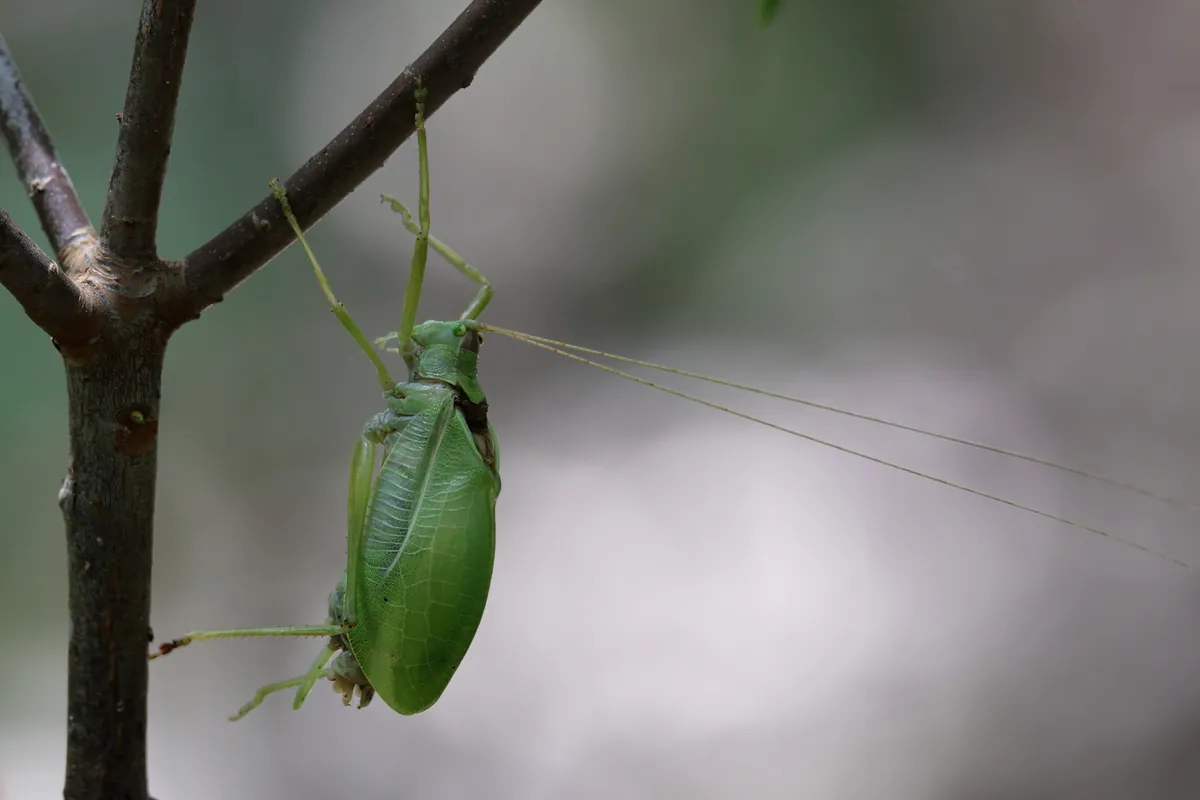
- About 1½ to 2½ inches long; leaf green. True katydid (University of Arkansas Arthropod Museum)
- Lifespan
- About a year; eggs laid on bark or plant tissue overwinter and hatch in spring. Common True Katydid (Illinois Department of Natural Resources)
- Diet
- Leaves of the deciduous trees it lives in. Common True Katydid (Missouri Department of Conservation)
- Active
- Nocturnal singer: males call at night from the tree canopy. True katydid (University of Arkansas Arthropod Museum)
- Calls peak
- Sings from July through November (Illinois). Common True Katydid (Illinois Department of Natural Resources)
- Habitat
- Crowns of deciduous trees in oak-hickory forests, parks and yards; nearly flightless. True katydid (University of Arkansas Arthropod Museum)
Sounds like… but isn't
- Cricket: Crickets give clean, musical chirps from the ground or shrubs, while katydids rasp harshly in short groups from high in the trees.
- Cicada: Cicadas buzz in a long continuous drone mostly in daytime; katydids sing at night in short, separate pulses.
Should I worry?
No. Common true katydids live in the treetops and eat leaves of the deciduous trees they live in. Katydids in general rarely cause significant damage to crops or ornamental plants, though you may see some feeding on garden leaves and flowers in late summer. No control is needed.
They are an important food source for birds, bats, tree frogs and other wildlife. The noise is seasonal and ends with cold weather.
Sources: Common True Katydid (Missouri Department of Conservation); Katydids (University of Wisconsin-Madison Extension, Wisconsin Horticulture).
Questions people ask
What does a katydid sound like?
A loud, harsh rasp in short groups of two or three pulses that people hear as "katy-did" or "katy-didn't," repeated over and over from the treetops at night.
Why are katydids so loud at night?
They are calling for mates, and many katydids in the same trees answer each other. Their sound carries well on still, warm nights when there is little other noise.
Why can't I see the katydid I hear?
Common true katydids stay high in the tree canopy and are leaf-green with wings shaped like leaves, so they are very hard to spot even when one is calling right above you.
When do katydids stop singing?
They sing from midsummer into fall. The song slows as nights get cooler and ends after hard frosts.
Are katydids harmful?
No. They eat tree leaves and rarely cause significant plant damage, and they do not need to be controlled.
How long do katydids live?
About a year. Eggs laid on tree bark in late summer or fall survive the winter and hatch in spring, and the adults sing from midsummer until cold weather. Source: Illinois Department of Natural Resources.
Please don't play these recordings at wild animals, especially in parks: it can stress them, and many parks prohibit it.